

I have seen businesses collect enormous amounts of information without knowing how to turn it into useful action. Sales reports, website activity, customer feedback, inventory records, and financial statements may contain valuable signals, but those signals are easily missed when information remains scattered. Data analytics for business decisions transforms these records into insights that help leaders understand performance, evaluate opportunities, and select actions with greater confidence.
Analytics does not eliminate uncertainty or replace professional judgment. Instead, it gives decision-makers stronger evidence. When leaders combine accurate information with experience and business context, they can make choices that are easier to explain, measure, and improve.
What Does Data Analytics Mean in Business?
Data analytics is the process of collecting, organizing, examining, and interpreting information to answer a business question. It converts raw figures into findings that can support a specific decision.
Consider a retailer experiencing declining profits. Total sales alone will not reveal the cause. The company may need to examine product margins, return rates, advertising costs, seasonal demand, inventory shrinkage, and customer behavior. This analysis might show that revenue is rising while excessive returns and fulfillment expenses are reducing profitability.
The important distinction is between reporting and insight. A report might state that returns increased by 15 percent. An insight explains which products caused the increase, why customers returned them, and what action could reduce future losses.
The Four Types of Business Analytics
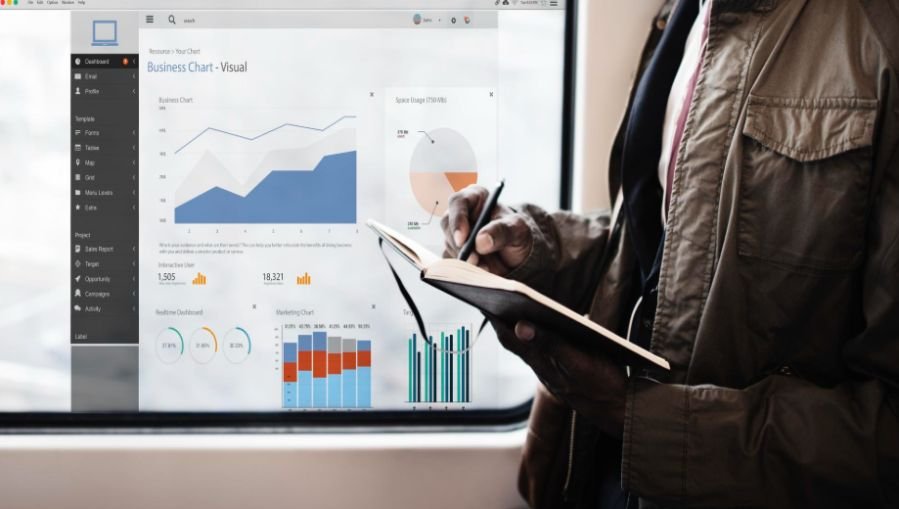
Descriptive Analytics
Descriptive analytics answers, “What happened?” It summarizes historical or current performance through figures such as revenue, website visits, customer retention, production volume, and operating costs.
Dashboards, charts, and monthly reports commonly use descriptive analytics. It establishes a reliable picture of performance before a company investigates causes or predicts future events.
Diagnostic Analytics
Diagnostic analytics answers, “Why did it happen?” It examines relationships, patterns, and unusual changes to identify possible causes.
If online sales declined, analysts might compare traffic sources, conversion rates, product availability, checkout errors, and competitor pricing. They could discover that visitor numbers remained steady but mobile customers abandoned the payment page after a software update.
Predictive Analytics
Predictive analytics answers, “What is likely to happen?” It uses historical patterns, statistical models, and sometimes machine learning to estimate future results.
Businesses apply it to forecast demand, identify customers likely to cancel, anticipate equipment failure, estimate credit risk, and plan staffing. A forecast is not a guarantee, so leaders should evaluate its assumptions and possible margin of error.
Prescriptive Analytics
Prescriptive analytics answers, “What should we do next?” It compares potential actions and recommends an option based on goals, constraints, and predicted outcomes.
A delivery company, for example, could use it to recommend routes based on fuel costs, vehicle capacity, deadlines, and traffic. Human oversight remains essential when recommendations affect employees, customers, safety, or legal responsibilities.
How Analytics Improves Important Decisions
Understanding Customers
Customer data can reveal purchasing patterns, changing preferences, common complaints, and reasons people leave, helping businesses identify strategic opportunities.
Companies can use these findings to refine products, personalize communication, and focus resources on valuable customer groups.
Segmentation should be based on meaningful behavior rather than assumptions. Businesses must also collect and use personal information responsibly, obtain appropriate consent, and protect it from unauthorized access.
Improving Marketing and Sales
Marketing teams can compare channels using qualified leads, acquisition cost, conversion rate, and long-term customer value, making this analysis a useful part of a marketing audit for business.
This prevents them from judging campaigns solely by impressions or clicks.
Sales analysis can expose seasonal demand, high-performing regions, profitable services, and weak points in the sales funnel. These insights help teams adjust pricing, campaigns, and sales forecasts.
Increasing Operational Efficiency
Operational data helps businesses locate delays, repeated errors, unused capacity, excess inventory, and costly processes. Manufacturers can monitor downtime, while retailers can compare stock levels with expected demand.
Effective data analytics for business decisions connects operational metrics with commercial outcomes. Reducing delivery time is valuable, for instance, when it also improves satisfaction, repeat purchases, or fulfillment costs.
Managing Financial Risk
Finance teams use analytics to monitor cash flow, expenses, profitability, payment delays, and budget variances. Patterns can also indicate suspicious transactions or emerging financial pressure.
Leaders should examine several measures together. Cutting costs might improve short-term margins while weakening service quality, employee capacity, or future growth.
How to Turn Data Into Action

Start With a Clear Decision
The process should begin with a question, not a dashboard. “How can we improve performance?” is too broad. “Which change could reduce customer cancellations next quarter?” gives the analysis a defined purpose.
Choose Relevant Measures
Every metric should help answer the central question. Useful measures may include retention, profit margin, defect rate, inventory turnover, delivery time, or customer acquisition cost.
Vanity metrics can create a misleading picture. A growing audience has limited value if it produces no qualified leads, sales, or lasting customer relationships.
Check Data Quality
Duplicate, incomplete, outdated, or inconsistent records can lead to poor conclusions. Businesses should verify data sources, definitions, time periods, and collection methods before relying on results.
Leaders must also distinguish correlation from causation. Two events occurring together does not prove that one caused the other. Experiments, controlled comparisons, and additional evidence may be necessary.
Communicate a Recommendation
An effective analysis explains what was discovered, why it matters, what action is recommended, and how success will be measured. Visuals should clarify the evidence rather than overwhelm readers with unnecessary figures.
Measure the Outcome
The process does not end when a decision is made. Teams should compare actual results with the expected outcome and record what they learned. This feedback makes future analysis more accurate and useful.
Common Mistakes to Avoid
Collecting more information than necessary can create confusion instead of insight. Other mistakes include selecting metrics after seeing the results, ignoring missing records, relying on a single data source, and treating predictions as certainties.
Bias can also enter through data collection, model design, or interpretation. Decision-makers should question surprising findings, consider alternative explanations, and involve people who understand the affected area.
Frequently Asked Questions
1. What is the main purpose of data analytics?
Its purpose is to transform information into insights that help organizations solve problems, identify opportunities, reduce uncertainty, and measure performance.
2. How does data analytics support better decisions?
It allows leaders to compare choices using evidence, detect patterns that may not be immediately visible, and monitor whether an implemented decision produced the intended result.
3. Can small businesses use analytics?
Yes. Small businesses can begin with spreadsheets, accounting reports, website analytics, customer surveys, and simple dashboards. The quality of the question matters more than having expensive software.
4. Why is data analytics for business decisions important?
It helps organizations move beyond guesswork by connecting reliable evidence with a specific commercial problem, recommended action, and measurable outcome.
Final Thoughts
I believe analytics creates the most value when it remains connected to a real decision. A sophisticated dashboard is ineffective if nobody knows what action to take. By beginning with a clear question, validating the information, considering business context, and measuring the result, leaders can turn everyday records into practical improvements without surrendering human judgment.
[…] Data analytics for business decisions can also help businesses evaluate backup performance, identify failure patterns, and make better decisions about their data protection strategy. A platform should offer automatic scheduling, encryption during transfer and storage, file versioning, failure notifications, centralized management, and flexible retention. […]