

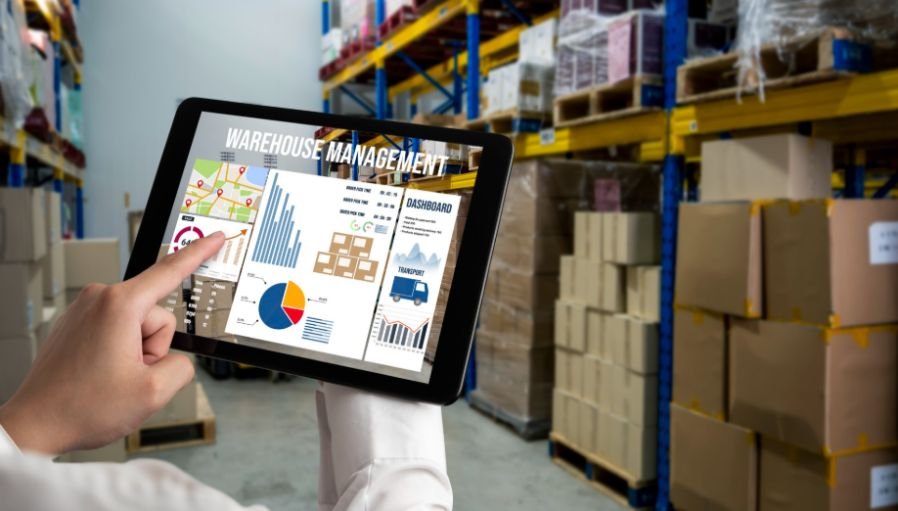
I have seen how quickly inventory becomes difficult to control when a retail business adds products, locations, or online sales channels. A spreadsheet that worked for one small store may become unreliable once staff must coordinate stock between a shop, warehouse, website, and marketplace. Modern inventory management technology for retailers replaces fragmented records with connected tools that show what is available, where it is stored, and when it should be reordered.
This technology is no longer limited to large chains. Cloud platforms, affordable barcode scanners, mobile applications, and integrated point-of-sale systems have made sophisticated inventory control accessible to growing retailers. The real advantage is not simply knowing how many units are in stock. It is having accurate information that supports purchasing, fulfillment, pricing, and customer service.
What Is Modern Retail Inventory Technology?
Retail inventory technology includes the software, hardware, and connected systems used to record and manage products. It follows stock as products are ordered, received, stored, transferred, sold, returned, or removed because of damage.
A modern system usually connects inventory records with the point-of-sale platform and ecommerce store. When an employee sells an item at the register, the available quantity changes automatically. The same adjustment can appear online, helping prevent another customer from ordering an unavailable product.
Advanced platforms can also manage purchase orders, supplier information, product variants, serial numbers, bundles, expiration dates, and stock transfers. Instead of creating isolated records for each channel, retailers gain one dependable source of inventory information.
Important Technologies Used in Retail Inventory Management

Cloud-Based Inventory Software
Cloud inventory software provides a central dashboard that authorized employees can access from different locations. Changes made in a store, warehouse, or office are synchronized without waiting for end-of-day updates.
These platforms may provide low-stock alerts, sales reports, purchase-order management, forecasting tools, and mobile access. Cloud delivery also makes it easier to update software and expand the system when the retailer opens another location.
Barcode Scanning
Barcode technology remains one of the most practical tools for retail inventory control. Employees scan a product when it arrives, moves, sells, or returns. This is generally faster and more accurate than manually typing a SKU or quantity.
Retailers can also use barcode scanners during cycle counts. Rather than closing the store for a complete annual stocktake, employees count smaller inventory sections regularly and correct discrepancies before they become serious.
RFID Tracking
Radio-frequency identification uses tags that communicate with RFID readers. Unlike conventional barcodes, RFID tags do not always require a direct line of sight, and multiple tagged products may be read rapidly.
This makes RFID particularly helpful for retailers carrying large numbers of individual items, such as apparel and footwear businesses. Staff can perform faster counts, locate misplaced merchandise, improve shelf availability, and support store-based fulfillment. However, tags, readers, software integration, and process changes make RFID more expensive to implement than basic barcode systems.
Artificial Intelligence and Demand Forecasting
AI-supported forecasting examines historical sales, seasonal patterns, promotions, lead times, and recent demand. It can estimate how much stock a retailer may need and recommend when to replenish it.
Retailers can also explore how AI helps ecommerce businesses use artificial intelligence to improve forecasting, personalization, automation, and other online retail operations.
Forecasting does not eliminate uncertainty. A system trained on incomplete or inaccurate information will produce weak recommendations. Retailers should therefore clean their data and review unusual events instead of accepting every automated suggestion without human oversight.
IoT Sensors and Smart Shelves
Internet of Things devices can collect information from shelves, storage areas, refrigerators, or other retail environments. Smart shelves may detect low quantities, while environmental sensors can monitor temperature and humidity for sensitive goods.
These tools can reduce manual inspections and reveal problems earlier. Their value depends on the type of merchandise, the reliability of the network, and whether the collected data connects properly with the main inventory platform.
Computer Vision
Computer vision uses cameras and image-processing software to recognize products, empty shelf spaces, misplaced items, or possible stock discrepancies. It can help employees prioritize shelf replenishment and investigate differences between recorded and visible inventory.
This technology requires careful planning around accuracy, camera placement, security, and privacy. It is most valuable when it solves a defined operational problem rather than being installed simply because it is new.
How Connected Systems Improve Retail Operations

The strongest results appear when separate technologies work together. A point-of-sale transaction can update the central inventory record, change online availability, contribute to a demand forecast, and trigger a replenishment alert.
This connected approach makes inventory management technology for retailers useful across the entire operation. Store associates can answer availability questions confidently. Ecommerce teams can reduce overselling. Purchasing managers can identify slow-moving products, while fulfillment employees can route orders from a location that has available stock.
Accurate inventory also supports buy-online-pick-up-in-store and ship-from-store services. These options depend on more than a product being present somewhere in the company. The system must know the location, available quantity, and whether the item has already been reserved for another customer.
Business Benefits Retailers Can Measure
Better inventory accuracy can reduce stockouts, excess purchasing, emergency supplier orders, and unnecessary markdowns. It may also release cash that was previously tied up in products with weak demand.
Automation reduces repetitive data entry and gives employees more time for customer-facing work. Faster receiving, transfers, counts, and returns can improve productivity without sacrificing control.
Customer experience also improves. Shoppers are less likely to travel to a store after seeing an inaccurate availability message. Employees can locate items faster, and online orders are less likely to be cancelled because recorded stock does not physically exist.
Retailers should measure inventory accuracy, stockout rate, sell-through rate, inventory turnover, carrying costs, shrinkage, fulfillment time, and forecast accuracy. These metrics reveal whether a new system is producing real operational value.
How to Choose the Right Inventory Technology

Begin by mapping every location, sales channel, supplier, and fulfillment process.
For retailers combining online sales with physical inventory, ecommerce warehouse organization ideas can also help improve storage, picking, and fulfillment workflows.
Identify where inventory information becomes delayed or inaccurate. This prevents the software selection process from becoming a comparison of impressive but unnecessary features.
Next, evaluate whether the platform connects with the existing point-of-sale system, accounting software, ecommerce platform, marketplaces, shipping providers, and warehouse tools. The system should also support expected growth in products, users, locations, and order volume.
Product data must be cleaned before migration. Standardize SKU formats, remove duplicates, confirm barcodes, organize variants, and decide how bundles will be deducted. New software cannot automatically repair poorly structured source information.
A limited pilot is safer than an immediate company-wide launch. Test receiving, sales, returns, transfers, counts, online availability, and reorder alerts with selected products. Train employees and document the correct procedures before expanding the system.
Common Implementation Mistakes
One common mistake is automating an inefficient process without correcting it first. Another is purchasing an enterprise platform that employees find too complicated to use consistently.
Retailers may also underestimate migration costs, training time, hardware requirements, integration work, cybersecurity, ongoing support, and other cloud migration challenges. Selecting a system solely on price can create expensive problems if it cannot communicate with existing tools.
Clear ownership is equally important. Someone should be responsible for product data, inventory adjustments, user permissions, exception handling, and system performance.
Frequently Asked Questions
1. What is the most useful inventory technology for a small retailer?
An integrated point-of-sale and cloud inventory system is usually the most practical starting point. Barcode scanning, low-stock alerts, purchase orders, and basic reporting can solve many everyday problems without requiring expensive infrastructure.
2. How does RFID differ from barcode tracking?
A barcode normally requires an employee to scan each visible label. RFID can read multiple tagged products without the same direct line-of-sight requirement, making counts faster but usually more expensive.
3. Can technology completely prevent inventory errors?
No. Software reduces manual errors, but incorrect receiving, theft, damage, duplicate SKUs, and poor procedures can still create discrepancies. Regular cycle counts and employee training remain necessary.
4. How does inventory management technology for retailers reduce stockouts?
It provides more accurate quantities, monitors sales patterns, calculates reorder points, and alerts purchasing teams before popular products run out. Forecasting and automated replenishment can improve this process further.
A Smarter Path Forward
I believe the best inventory system is not necessarily the one with the most advanced features. It is the one employees can use consistently and managers can trust when making purchasing and fulfillment decisions. Retailers should begin with accurate product data, connected sales channels, and clearly defined workflows before adopting more complex tools.
When cloud software, scanning, forecasting, and automation are introduced around genuine operational needs, inventory becomes easier to control. The business can respond faster, serve customers more reliably, and invest its cash in products that are actually likely to sell.


One thought on “Inventory Management Technology for Retailers: A Smarter Way to Control Stock”