
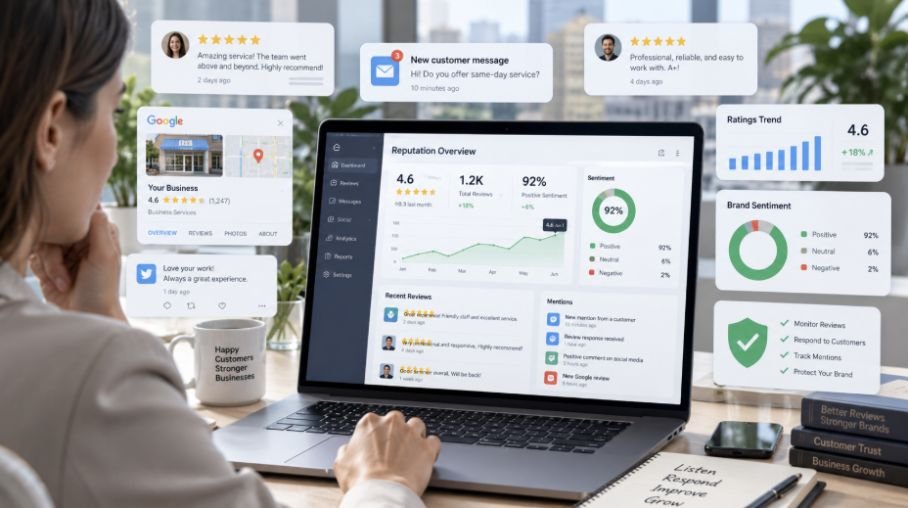
A harsh review can appear before breakfast and influence prospective customers by lunch. I have found that manually checking Google, Yelp, social networks, news sites, and forums creates dangerous blind spots. The right online reputation management tools for businesses collect those conversations, flag urgent complaints, and help teams respond before a small issue becomes a lasting search result.
The best choice depends on where customers discuss the brand. Birdeye is a strong all-around option for location-based companies, Brand24 makes broad monitoring accessible, and Sprout Social excels when social engagement drives reputation. This guide covers those platforms alongside tools for enterprises, agencies, and smaller teams.
What Reputation Management Software Does
Reputation software monitors reviews, social media, blogs, news, forums, and local listings. It can send alerts, analyze sentiment, request reviews, centralize responses, route complaints, and report changes in public opinion. Review-management products focus on ratings and listings, while social-listening and media-intelligence platforms detect wider conversations and emerging risks.
11 Reputation Management Tools Worth Considering
1. Birdeye: Best Overall for Location-Based Companies
Birdeye combines review monitoring, requests, responses, listings, surveys, messaging, and location reporting. It suits franchises and service companies, but its broad package may be excessive for teams needing only alerts. Pricing usually requires a quote.
2. Podium: Best for Reviews and Customer Messaging
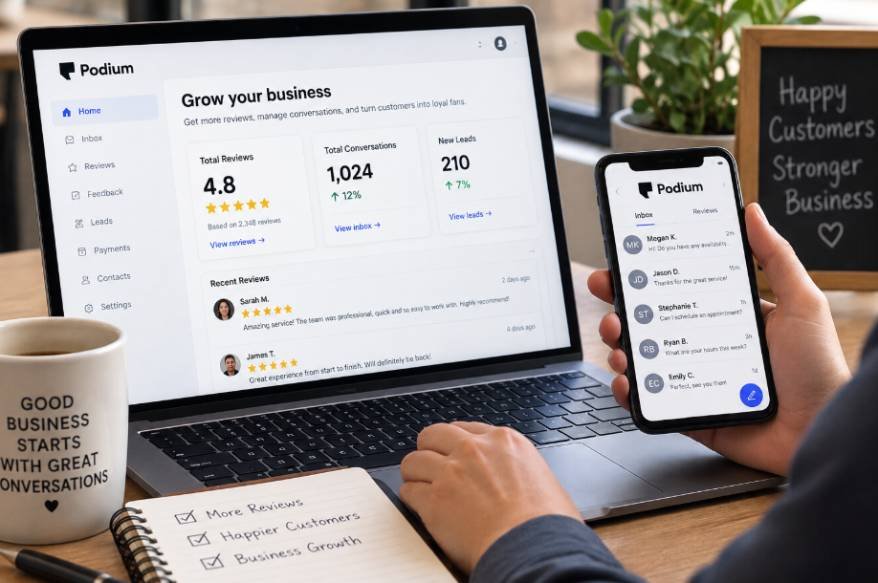
Podium connects review invitations with text-based customer communication. It suits local businesses that already use texting, although buyers should confirm which messaging, payment, and automation features their plan includes.
3. Reputation: Best for Large Multi-Location Brands
Reputation consolidates feedback, listings, surveys, social activity, and customer-experience data across numerous locations. Corporate teams can compare branches while local managers address complaints. Its scale and custom pricing target larger operations.
4. Brand24: Best for Accessible Web Monitoring
Brand24 tracks online mentions and uses sentiment and influence indicators to prioritize conversations. It gives growing brands broad awareness without enterprise-level complexity, but source coverage should be tested before purchasing a plan.
5. Brandwatch: Best for Enterprise Social Intelligence
Brandwatch supports consumer research, trend detection, competitor analysis, and large-scale social listening. It can uncover narratives that review alerts miss, although it is best suited to experienced marketing and communications teams.
6. Mention: Best for Straightforward Mention Tracking
Mention monitors brands, executives, competitors, and campaigns. Its search controls reduce irrelevant results when names have multiple meanings. Businesses should check account limits, historical data, alert frequency, reporting capabilities, and user allowances.
7. Sprout Social: Best for Social Response Workflows
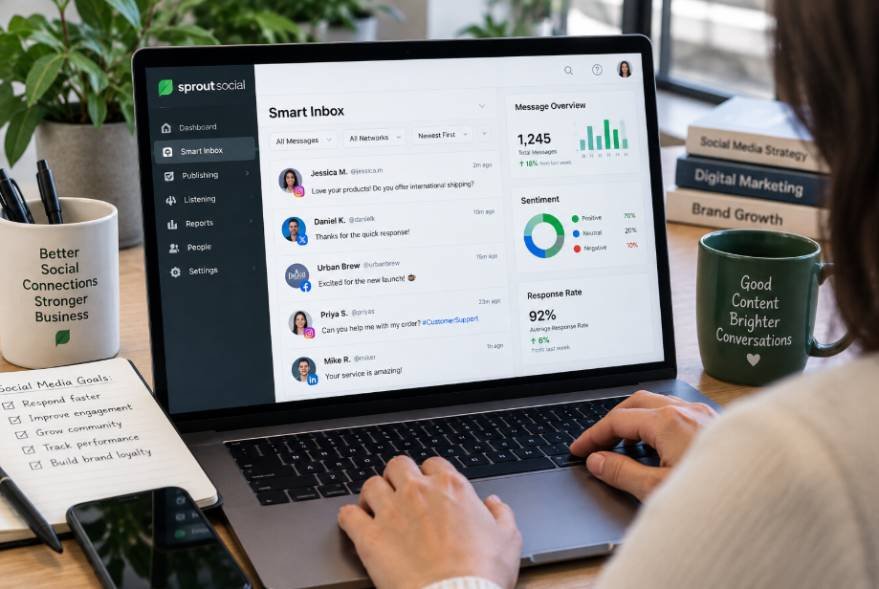
Sprout Social combines engagement, publishing, analytics, listening, and customer-care workflows. Its shared inbox supports assignments and prevents duplicate responses, but review-only users may not need its wider social media management package.
8. ReviewTrackers: Best for Centralizing Reviews
ReviewTrackers centralizes reviews, alerts, responses, feedback analysis, and location reporting. It can reveal recurring problems across restaurants, healthcare offices, hospitality properties, and service locations. Buyers should verify supported sources and current pricing.
9. BrightLocal: Best for Local SEO and Reviews
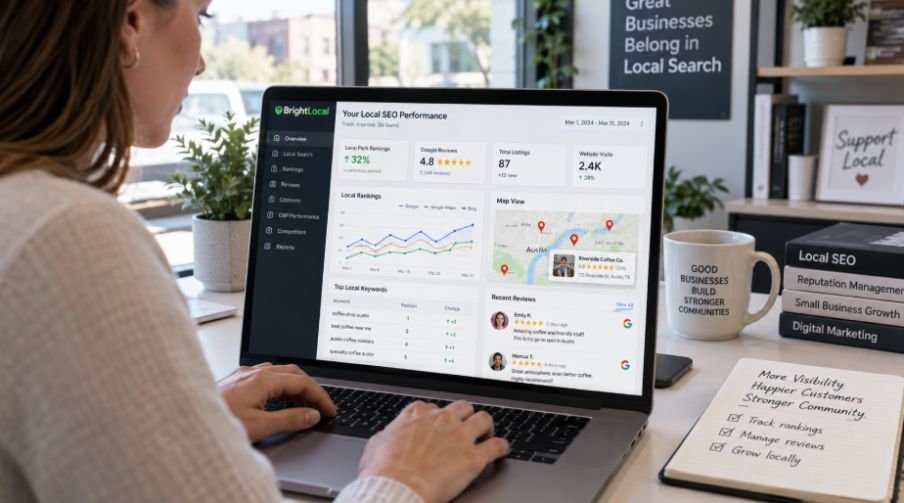
BrightLocal connects review management with Google Business Profile insights, local rankings, and citation management. It serves local companies and agencies better than larger brands requiring international news or advanced crisis monitoring.
10. Talkwalker: Best for Global Media Intelligence
Talkwalker offers broad monitoring, visual recognition, competitive intelligence, and crisis detection. It suits larger brands with dedicated analysts, international travel coverage requirements, established escalation procedures, and an enterprise-level budget.
11. Google Alerts: Best Free Starting Point
Google Alerts emails updates when Google discovers selected words or phrases. It is a useful backup, but it lacks review requests, social listening, centralized responses, workflow assignments, and dependable sentiment analysis.
How to Choose the Right Platform
Start with sources instead of impressive-looking features. A contractor may prioritize Google reviews, while an ecommerce brand may need product reviews, Reddit conversations, creator videos, and social mentions. A national consumer company may require news monitoring, multilingual analysis, image recognition, and rapid crisis alerts.
Useful software should notify the correct employee, record ownership, track responses, and escalate sensitive complaints. Integrations with a CRM, help desk, Slack, Microsoft Teams, or analytics platform can prevent reputation data from becoming another isolated workflow.
For businesses managing customer interactions across teams, understanding employee scheduling software for small businesses can also help connect workforce coordination with consistent customer service.
Calculate the total cost rather than relying on the advertised starting price. Ask about extra charges for locations, users, keywords, historical data, onboarding, API access, reports, and review-request volume. Test the product using real brand terms, executive names, product names, and common misspellings.
Create a Reliable Response Process
Assign owners for routine reviews and serious escalations. Set response-time goals, tone guidelines, and rules for moving account details to private support channels. Legal threats, safety allegations, discrimination claims, and privacy complaints require qualified human review.
AI can summarize discussions and draft replies, but a person must check accuracy, empathy, and context. Never manufacture feedback, suppress honest criticism, or request public reviews only from satisfied customers. Sustainable reputation growth comes from correcting the problems behind recurring complaints.
Track average ratings, review volume, response rate, response time, sentiment, recurring themes, and resolution outcomes by location and channel.
Similar operational tracking is important across other business functions, where technology for supply chain management can help teams monitor processes, identify problems, and improve coordination.
This prevents an improving companywide average from concealing an underperforming branch.
Frequently Asked Questions
1. What are the best online reputation management tools for businesses?
Birdeye suits reviews and multiple locations, Brand24 provides accessible web monitoring, Sprout Social supports social workflows, BrightLocal targets local visibility, and Brandwatch or Talkwalker provide enterprise intelligence. The right choice depends on the channels a company must monitor.
2. Can a small company manage its reputation for free?
A small company can start with Google Alerts, Google Business Profile, native review notifications, and social media alerts. Free tools require more manual checking and usually lack unified reporting, team assignments, sentiment analysis, and broad coverage.
3. Can reputation software remove negative reviews?
No legitimate tool can erase a valid review simply because a company dislikes it. A business can report content that violates platform rules, respond professionally, resolve the underlying issue, and encourage authentic customer feedback.
4. How quickly should a company answer a negative review?
Respond promptly, but prioritize accuracy and empathy. Acknowledge the concern, protect private information, explain the next step, and transfer customer-specific details to a secure communication channel.
The Final Takeaway
I would choose a platform based on the conversations most capable of affecting revenue, then test it with real mentions before accepting a long contract. The best system is not necessarily the one with the most features. It is the one that catches important signals, gives every issue an owner, and turns customer feedback into measurable operational improvements.