
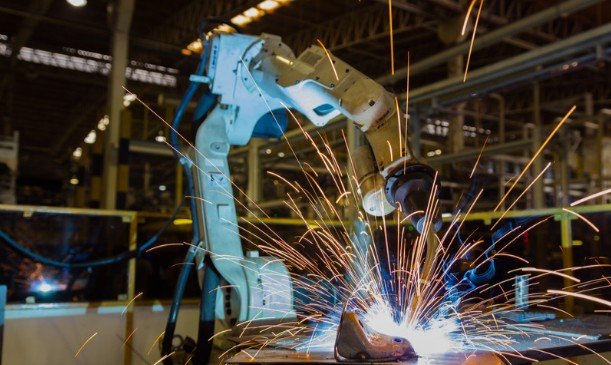
I used to associate robotic welding with massive automotive factories, permanent production lines, and budgets far beyond the reach of an independent fabrication shop. That picture is changing quickly. Compact robotic cells, collaborative robots, simplified programming, and flexible financing have made automation more attainable for smaller operations.
However, purchasing a robot does not automatically create a productive welding process. I believe the real question is whether a shop has the right parts, workflows, employees, and production demand to make the investment worthwhile. When those elements align, robotic welding for small manufacturers can increase capacity without removing the skilled judgment that experienced welders bring to complicated work.
Why Small Manufacturers Are Turning to Welding Automation
Small fabrication businesses across the United States face a difficult combination of limited hiring pools, rising labor expenses, demanding delivery schedules, and increasingly strict quality expectations. Experienced welders may spend hours producing the same bracket or joint when their expertise would be more valuable on custom assemblies and difficult repairs.
A robotic system can take over repeatable, physically demanding work while welders manage setup, quality verification, programming, and complex fabrication. Automation therefore changes how skilled labor is allocated rather than simply replacing it.
Consistent movement also helps control torch angle, travel speed, wire placement, and arc length. Once the process is correctly established, those repeatable conditions can reduce weld variation, excess spatter, grinding, rejected parts, and wasted filler metal.
What a Robotic Welding System Includes
The robotic arm is only one part of a complete installation. A functioning system normally includes a welding power source, torch, wire feeder, controller, programming interface, workholding fixtures, safety equipment, and fume extraction.
Depending on the application, a manufacturer may also need a rotary positioner, torch-cleaning station, seam-tracking sensors, machine vision, protective screens, fencing, interlocks, or additional floor reinforcement. These requirements explain why a robot-arm price rarely represents the final project cost.
The best solution is not necessarily the least expensive package. A cell that cannot accommodate future parts, heavier tooling, or changing production needs may become a costly limitation.
Cobot Welding vs. Traditional Industrial Robots
Collaborative Welding Robots
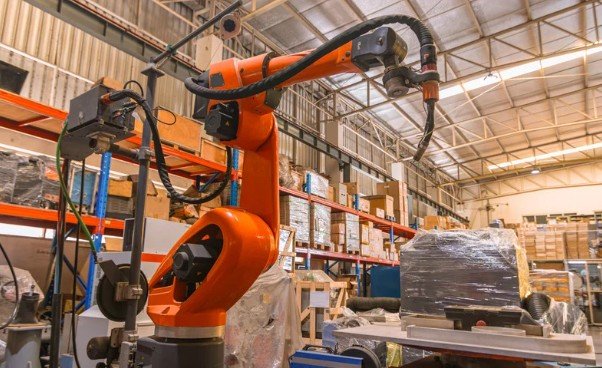
A collaborative robot, commonly called a cobot, is often the most approachable option for a small or midsize shop. Cobots generally have compact footprints and programming systems that allow an operator to guide the arm through a desired path or create welds through a graphical interface.
They are particularly useful for high-mix, low-volume production because operators can teach new jobs and redeploy the equipment more easily. Mobile cobot carts may also allow one system to serve multiple work areas.
A cobot arm’s collaborative rating does not make the welding operation inherently safe. The arc, torch, hot components, fumes, sparks, fixtures, and positioners create hazards that require a formal risk assessment and appropriate controls.
Traditional Robotic Welding Cells
Industrial welding robots are usually faster and better suited to long production runs, large payloads, demanding cycle times, and continuous operation. They commonly require fixed guarding, specialist programming, and more integration work.
A traditional cell may deliver greater output, but a cobot can offer better flexibility for a small shop processing frequently changing parts. The choice should follow the application rather than current industry excitement.
Which Welding Jobs Should Be Automated First?
The strongest first project is usually a stable part with repetitive welds, dependable demand, accessible joints, and consistent fit-up. Small brackets, frames, supports, enclosures, and subassemblies can be better starting points than a large, complicated product.
High annual volume helps, but volume alone does not determine suitability. A moderately sized batch with simple fixtures and quick changeovers may be more profitable to automate than a high-volume part with unpredictable gaps or distorted components.
One-off repairs, prototypes, frequently changing assemblies, and joints requiring constant interpretation often remain better suited to manual welding.
Fit-Up and Fixturing Determine the Result
Robots execute programmed movements precisely, but that precision becomes a disadvantage when parts arrive in different positions. An automated torch cannot reliably compensate for severe gaps, inconsistent dimensions, misplaced tack welds, or components loaded backward.
Before purchasing equipment, a manufacturer should examine cutting accuracy, forming consistency, fixture design, material preparation, tack placement, and part flow. A poka-yoke fixture that allows a component to be loaded in only one orientation can prevent expensive errors.
Touch sensing, real time control seam tracking, laser tracking, and machine vision can accommodate some variation. These technologies expand the process window, but they should support good preparation rather than substitute for it.
The Real Cost of Robotic Welding
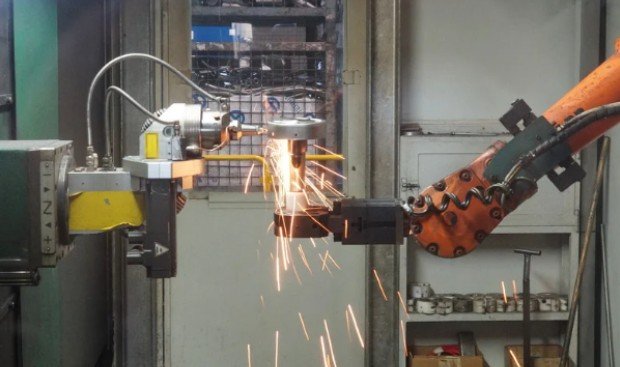
A realistic budget must include integration, fixtures, positioners, guarding, ventilation, electrical work, training, software, consumables, spare parts, preventive maintenance, and production downtime during commissioning.
Manufacturers should also plan for ongoing expenses such as torch liners, contact tips, nozzles, wire, shielding gas, sensor maintenance, software support, and employee training. Financing and leasing may reduce the initial burden, but the total cost of ownership still matters.
A quote should clearly define installation, programming, acceptance testing, training, warranty coverage, technical support, and responsibility for meeting production targets.
How to Calculate the Potential Return
A meaningful return-on-investment calculation should compare current and projected cost per acceptable part. Labor savings alone provide an incomplete picture.
The calculation should consider increased throughput, additional available production hours, reduced scrap, lower rework, decreased grinding, more predictable scheduling, and the value of redirecting skilled welders to higher-margin work. It should then subtract integration costs, financing, maintenance, consumables, training, utilities, and expected downtime.
Managers should use conservative production estimates instead of assuming the robot will operate at maximum speed every hour. Loading, unloading, part inspection, changeovers, maintenance, and upstream delays still affect output.
Productivity and Quality Benefits
Automation can increase arc-on time because the system does not experience fatigue or lose concentration during repetitive runs. It can also help a business quote larger contracts with greater confidence because output becomes easier to predict.
Repeatable weld parameters may improve appearance, penetration consistency, dimensional control, and documentation. Reduced variation is particularly valuable when customers expect traceability or consistent results across thousands of components.
Automation can also improve ergonomics by limiting employee exposure to repetitive motion, awkward positioning, radiant heat, and extended time near welding fumes.
Programming, Training, and Maintenance
Modern cobots may not require conventional computer coding, but easy programming does not eliminate the need for welding knowledge. Someone must select appropriate parameters, recognize defects, manage distortion, inspect consumables, and adjust the process when materials or joint conditions change.
At least two employees should understand daily operation so production does not depend on one person. Training should cover programming, fixture loading, inspection, fault recovery, torch maintenance, lockout procedures, and emergency response.
Integrator support is equally important. A technically impressive system provides little value when a minor fault stops production and assistance is unavailable.
Safety and Fume Control in American Shops
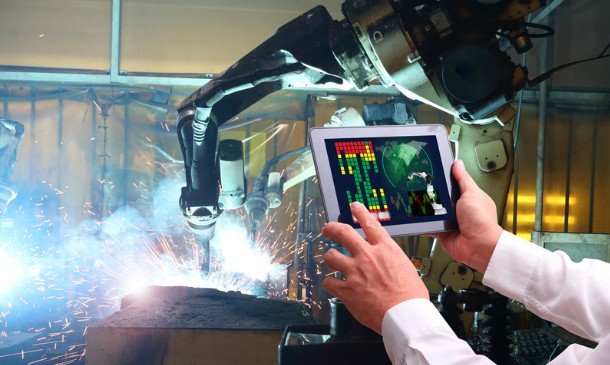
US manufacturers must evaluate the complete robotic application, not merely the arm. Appropriate protection may include fencing, interlocked access, arc-rated curtains, emergency stops, presence detection, local exhaust ventilation, fire prevention, and personal protective equipment.
Welding fumes remain hazardous even when no employee is holding the torch. Ventilation must capture contaminants effectively, and additional precautions may be necessary when welding stainless steel, coated metals, or materials producing particularly harmful emissions.
Applicable OSHA requirements, consensus standards, equipment instructions, and local regulations should be reviewed during cell design. A qualified integrator and workplace-safety professional can help determine the controls required for a specific installation.
A Practical First-Automation Plan
Begin by documenting cycle time, rework, scrap, downtime, and annual demand for several candidate parts. Select a predictable component and run a feasibility study using actual production samples.
Ask potential integrators to demonstrate the complete process, including loading, programming, welding, inspection, and changeover. Confirm that the proposal accounts for part variation, fumes, guarding, floor space, utilities, training, and future expansion.
Establish measurable acceptance criteria before ordering. These might include cycle time, acceptable weld rate, changeover duration, uptime, dimensional tolerance, and operator-training requirements.
Frequently Asked Questions
1. Is robotic welding for small manufacturers suitable for short production runs?
Yes, particularly when a cobot can be reprogrammed quickly and the shop uses adaptable fixtures. The decisive factors are weld repetition, setup time, part consistency, and expected demand rather than batch size alone.
2. Will a welding robot replace skilled welders?
It usually handles repetitive joints while skilled employees perform complex fabrication, inspection, programming, troubleshooting, and process improvement. Shops frequently use automation to extend limited welding capacity.
3. Does a cobot welding cell need guarding?
Possibly. Although the arm may include collaborative safety features, welding introduces arc radiation, fumes, heat, sparks, pinch points, and hot materials. The required protection must be determined through an application-specific risk assessment.
4. How quickly can robotic welding pay for itself?
Payback varies with utilization, labor requirements, rework, throughput, financing, and integration costs. A conservative calculation based on acceptable finished parts provides a more reliable estimate than a generic payback promise.
Final Thoughts
I see welding automation as a production tool, not a shortcut around process discipline. A robot magnifies whatever surrounds it: consistent parts and good fixtures produce dependable results, while uncontrolled fit-up and poor workflow create automated problems.
For a small American manufacturer, the strongest approach is to begin with one proven part, document current costs, establish realistic targets, and select a system that employees can operate and maintain. When preparation comes before purchasing, automation can increase output, protect valuable welding talent, and create capacity for sustainable growth.
[…] Fixtures determine whether parts enter the cell in a repeatable position. Even an accurate robot can produce poor results when components have inconsistent dimensions, contamination, distortion, or excessive joint gaps. This makes reliable fixturing and part preparation essential when implementing robotic welding for small manufacturers. […]