
I have seen how a minor change in arc behavior can be dismissed as an operator problem, even when the real cause is a deteriorating cable, blocked cooling passage, worn wire feeder, or unstable power supply.
Waiting for equipment to stop completely makes repairs more expensive and may allow defective welds to enter production. Welding machine diagnostic technology provides a smarter approach by detecting abnormal conditions, interpreting machine data, and warning operators before a small issue becomes a major failure.
What Is Welding Machine Diagnostic Technology?
Modern diagnostic systems use sensors, controller logs, fault codes, software, and communication networks to evaluate the health of welding equipment. Instead of relying only on visual inspection or operator experience, they collect measurable information from the power source and connected components.
This technology can monitor the welding machine itself, the welding process, or both. Machine diagnostics evaluates components such as cooling fans, circuit boards, power modules, feeders, torches, motors, and safety interlocks. Process monitoring examines whether voltage, amperage, wire-feed speed, travel speed, gas flow, and arc behavior remain within approved limits.
Weld inspection is different. Inspection looks for discontinuities or defects in the completed joint, while diagnostic monitoring searches for equipment or process changes that could create those defects.
How Modern Welding Diagnostics Work
Sensors Collect Operating Data
Sensors provide the foundation of a diagnostic system. Depending on the machine and welding process, they may measure current, voltage, temperature, vibration, pressure, force, displacement, cooling flow, gas flow, or motor load.
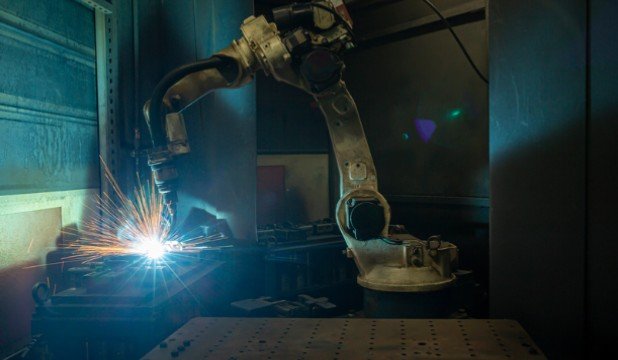
Robotic welding cells can collect additional information about cycle time, torch position, robot movement, seam location, and wire delivery. Resistance welding equipment may monitor electrode force, secondary current, resistance, and electrode displacement. Laser systems can track optical components, cooling-water quality, power stability, and safety hardware.
Software Establishes Acceptable Limits
Diagnostic software compares live measurements with predetermined operating limits. These limits may be entered by a technician, taken from a qualified welding procedure, or created by recording a series of acceptable welds.
When a measurement moves outside its approved range, the system generates a warning, records an event, or stops production. This approach helps identify intermittent problems that might disappear before a technician arrives.
Fault Codes Guide Troubleshooting
Built-in diagnostics convert detected conditions into fault codes, warning messages, or dashboard alerts. A code might indicate overheating, low input voltage, communication failure, restricted coolant flow, excessive wire-feed motor load, or an open safety interlock.
Remote Platforms Expand Visibility
Network-connected machines can send operating information to local dashboards or cloud-based platforms. Supervisors can compare weld cells, review alarms, check equipment usage, and examine trends without standing beside every machine.
Remote access can also allow an authorized service technician to review logs and settings before visiting the facility. Some faults can be resolved through configuration changes or guided checks, reducing delays and unnecessary service travel.
Problems Diagnostic Systems Can Detect
Diagnostics can uncover electrical, thermal, mechanical, process, and communication problems. Fluctuating output may reveal unstable input power, loose connections, failing power electronics, or excessive cable resistance. Rising internal temperature can indicate blocked ventilation, dust buildup, fan failure, or an overloaded duty cycle.
An increasing wire-feed motor load may point to excessive drive-roll pressure, a contaminated liner, a damaged contact tip, poor cable routing, or unsuitable wire. Gas-flow alerts can expose leaks, restrictions, empty cylinders, or malfunctioning solenoids. In automated cells, cycle-time changes and abnormal vibration may reveal mechanical wear before the robot generates a major alarm.
The technology can also detect parameter drift. A machine may continue operating while producing voltage, current, or wire-feed values outside the required procedure. Flagging these events supports traceability and allows questionable welds to be isolated promptly.
From Reactive to Predictive Maintenance
Traditional reactive maintenance begins after equipment fails. Preventive maintenance follows a calendar, replacing or servicing components at fixed intervals. Condition-based maintenance uses actual equipment readings to determine when attention is needed.
Predictive maintenance goes further by examining historical patterns. Machine-learning software can establish a baseline for normal operation and identify small changes associated with developing failures. It may estimate when a component is likely to require service, helping teams plan repairs during scheduled downtime.
Predictions are only as reliable as the information behind them. Inaccurate sensors, inconsistent data collection, limited failure history, or poorly labelled maintenance records can produce misleading alerts. Human review remains necessary, especially when equipment safety and weld integrity are involved.
Benefits for Welding Operations
Effective diagnostics reduces the time spent guessing why a machine is behaving unpredictably. Technicians can begin with recorded evidence instead of replacing several components through trial and error.
Earlier detection can reduce unexpected downtime, prevent secondary damage, and extend component life. Parameter monitoring may also improve consistency by revealing whether a problem comes from the machine, consumables, material fit-up, settings, or operator technique.
Stored records strengthen traceability. Managers can review when a warning occurred, which machine produced the weld, what parameters were recorded, and what corrective action followed. This information can support quality reviews, training, maintenance planning, and continuous improvement.
Implementation Challenges to Consider
Not every welding operation needs an expensive AI platform. A small workshop may gain substantial value from built-in error codes, regular output testing, and disciplined maintenance records. A large automated facility may need centralized dashboards, remote access, predictive analytics, and integration with maintenance-management software.
Older machines may require external current sensors, temperature sensors, communication gateways, or independent weld monitors. Before retrofitting equipment, teams should evaluate compatibility, calibration requirements, network reliability, data ownership, cybersecurity, and the cost of supporting the system.
Alerts must also be actionable. Too many poorly configured warnings can create alarm fatigue. Each notification should identify the affected machine, abnormal measurement, severity, likely causes, and appropriate response.
Frequently Asked Questions
1. Can diagnostics prevent every welding-machine failure?
No. Diagnostics can identify many abnormal patterns and developing faults, but sudden component failures may occur without a clear warning. Inspection and scheduled maintenance are still required.
2. Does welding machine diagnostic technology inspect finished welds?
Welding machine diagnostic technology mainly evaluates equipment condition and operating parameters. Finished weld inspection may require visual examination, destructive testing, ultrasonic testing, radiography, or other approved methods.
3. Can diagnostic tools be added to older welders?
Some older machines can be retrofitted with external sensors, weld monitors, gateways, or data loggers. Compatibility depends on the power source, available connections, welding process, and required measurements.
4. Are remote welding diagnostics secure?
They can be secure when systems use encryption, controlled user access, updated software, segmented networks, and documented authorization. Remote connections should follow the organization’s cybersecurity policies.
Final Perspective
I see diagnostics as a way to replace uncertainty with useful evidence. It cannot eliminate every breakdown or substitute for skilled technicians, but it can reveal warning signs that operators may otherwise miss. The best system is not necessarily the most complex one. It is the one that monitors meaningful signals, produces understandable alerts, and leads to timely action.
When diagnostics is combined with proper inspection, documented maintenance, trained personnel, and manufacturer-approved procedures, welding operations become more predictable. Problems can be investigated earlier, repairs can be scheduled more intelligently, and equipment can deliver consistent performance for longer.
[…] Welding machine diagnostic technology should support the quality program by preventing deviations and improving traceability. Inspection then evaluates the resulting joint according to the applicable acceptance criteria. […]