
I used to think that welding records were mainly paperwork created for inspections and customer requirements. Modern monitoring systems changed my view. The information generated during welding can reveal unstable parameters, excessive downtime, training needs, and emerging equipment problems before they become expensive failures.
Effective welding data collection and analysis turns those raw measurements into practical production intelligence. It helps manufacturers understand what happened during each weld, determine whether the process remained within established limits, and identify opportunities to improve quality, consistency, and productivity.
What Is Welding Data Collection?
Welding data collection is the process of recording information produced before, during, and after a weld. The information may come directly from a connected power source or from external sensors, cameras, robot controllers, programmable logic controllers, and production software.
A basic system might record amperage, voltage, and arc-on time. A more advanced installation can associate each weld with its operator, welding procedure specification, part number, joint location, filler metal, shielding gas, and inspection results.
The purpose is not simply to accumulate numbers. Each record should help answer a production or quality question. Manufacturers may want to know why defects increased during a particular shift, whether a new consumable improved performance, or which welding cell is creating a production bottleneck.
Which Welding Parameters Should Be Collected?
The appropriate variables depend on the welding process, equipment, application, and reason for monitoring. Current and voltage are among the most widely recorded parameters because they help indicate whether the arc remained within an approved operating range.
Wire-feed speed, travel speed, gas-flow rate, weld duration, heat input, energy consumption, and arc-on time can provide additional insight. Robotic systems may also capture torch position, angle, work distance, program number, cycle time, and equipment alarms.
Specialized applications can use acoustic sensors, high-speed cameras, thermal imaging, force measurements, or temperature sensors. Resistance spot welding systems may monitor current, force, resistance, electrode displacement, and weld time. The collected variables should always reflect the process being studied instead of following a generic checklist.
Contextual information is equally important. A current reading has limited value if it cannot be connected to the correct component, operator, procedure, machine, and production time.
How Is Welding Data Collected?
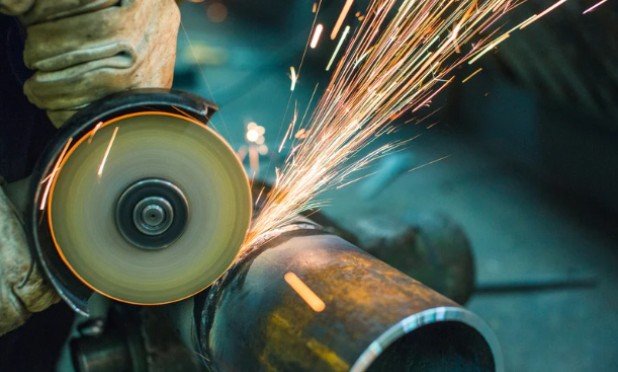
Manual records remain useful in small workshops, but they can be slow, inconsistent, and vulnerable to transcription errors. Automated systems collect information directly from equipment and sensors, providing more frequent and dependable measurements.
Modern welding power sources may include built-in connectivity and data-logging capabilities. Older or mixed-brand fleets can sometimes be connected through external modules. These devices capture signals and send them through wired or wireless networks to local software, cloud platforms, or industrial databases.
An edge device may process high-speed information close to the welding cell. This allows the system to generate an immediate alert without sending every raw measurement across the network. Selected records can then be transferred to a central database for reporting, traceability, and long-term analysis.
How Is Collected Weld Data Analyzed?
The simplest method compares recorded values with predetermined limits. If amperage, voltage, gas flow, or weld duration falls outside the approved range, the system can flag the weld for review.
A stronger method compares current production with a validated baseline established from a stable process and known-good welds. Statistical process control can then reveal variation, drift, recurring patterns, and unusual events that individual threshold alarms might miss.
Trend analysis helps engineers examine performance across machines, operators, shifts, products, and time periods. Correlation analysis can investigate whether parameter changes appear alongside porosity, incomplete fusion, excessive spatter, burn-through, or other problems.
Advanced platforms may use anomaly-detection or machine-learning models to recognize complex combinations of signals. These models can support predictive quality and maintenance, but their output must be validated against reliable inspection results.
How Data Improves Welding Quality
Real-time monitoring allows teams to notice unstable conditions while production is still underway. An alert may reveal inconsistent wire delivery, changing electrical resistance, poor gas coverage, worn contact tips, incorrect settings, or equipment deterioration.
The data can also support root-cause analysis. Instead of relying entirely on memory or assumptions, engineers can review the conditions recorded when a questionable weld was produced.
Monitoring does not automatically prove that a weld is acceptable. Stable process parameters indicate that welding occurred under expected conditions, but they may not reveal every internal discontinuity. Visual inspection, nondestructive examination, destructive testing, and applicable acceptance criteria remain important when required.
How Data Supports Productivity and Cost Control
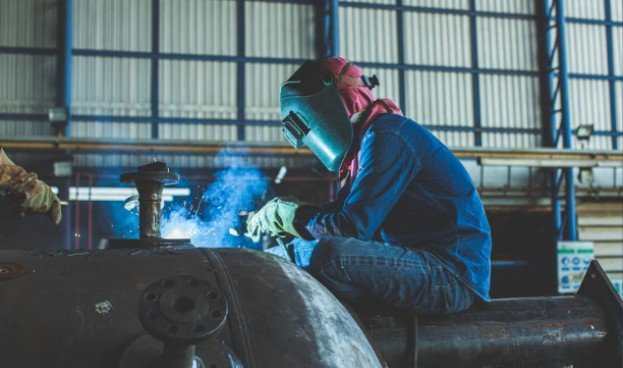
Production dashboards can expose bottlenecks and compare performance across cells without relying on isolated observations. Teams can measure whether changes in fixtures, consumables, procedures, or training produced meaningful improvements.
Accurate records also help estimate filler-metal consumption, energy use, rework, and cost per component. However, comparing individual welders requires care. Differences in parts, joint access, preparation, and assigned work can make simplistic rankings misleading.
Why Weld Traceability Matters
Traceability connects production records to a specific component or weld seam. If a customer reports a failure or an inspection identifies a problem, the manufacturer can retrieve the relevant process history instead of investigating an entire production run.
This documentation is especially valuable in safety-sensitive industries and applications governed by customer specifications, codes, or quality-management requirements. Reliable traceability depends on accurate identification, controlled access, consistent timestamps, and protection against unauthorized changes.
Manufacturers should also establish policies for cybersecurity, backups, access permissions, and data retention. Collecting large amounts of information without a plan for storage and retrieval can create costs without delivering useful insight.
How to Implement a Welding Data System
Implementation should begin with a clearly defined problem. A company might want to reduce rework, improve traceability, increase arc-on time, or detect process drift earlier. That goal determines which measurements and reports are useful.
The next step is to establish a reliable baseline and select equipment that works with the existing welding fleet. The system should connect records with parts, procedures, operators, and inspection outcomes.
A pilot program in one representative cell makes it easier to test sensors, alarm limits, dashboards, and employee workflows. Operators, welding engineers, quality personnel, IT teams, and production managers should participate in the process.
Frequently Asked Questions
1. What is welding data analysis used for?
It is used to monitor process stability, investigate defects, measure productivity, improve traceability, identify training needs, and detect developing equipment problems.
2. Can monitoring software detect every defective weld?
No. Software can flag deviations and predict risk, but it may not detect every discontinuity. Required inspection and testing should still follow the applicable procedure, specification, or code.
3. Can older welding machines collect production data?
Some older machines can be connected through external monitoring modules and sensors. Compatibility depends on the process, available signals, connection method, and chosen software.
4. Why is welding data collection and analysis important?
Welding data collection and analysis provides objective information that helps teams control variation, document production, investigate failures, reduce waste, and make better operational decisions.
Final Perspective
I see welding information as valuable only when it leads to a clear decision. Recording millions of values means little if nobody understands which trends matter or what action should follow an alert.
The most effective systems begin with a specific production goal, collect relevant parameters, connect them with traceable records, and validate findings through established inspection methods. When qualified people use the results consistently, welding data becomes a practical tool for improving quality, productivity, accountability, and long-term process control.