
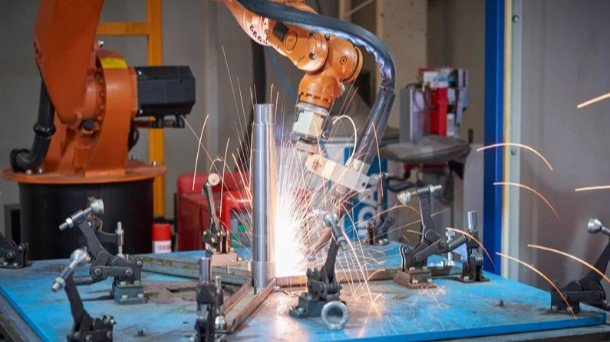
I used to think welding automation simply meant replacing a welder with a robotic arm. In reality, it covers a much wider collection of machines, sensors, controls, and software. Some systems automate only torch movement, while others handle positioning, welding, inspection, and production records.
This guide delivers automated welding technology explained in practical language, including how the equipment works, where it is used, and why skilled people remain essential to the process.
What Is Automated Welding Technology?
Automated welding uses mechanical or computer-controlled equipment to perform part or all of a welding operation with limited human intervention. Depending on the setup, the equipment may control torch movement, workpiece rotation, voltage, amperage, wire-feed speed, travel speed, shielding-gas flow, and arc timing.
Automation describes how the operation is controlled rather than the welding process itself. MIG, TIG, resistance spot, submerged arc, plasma, and laser welding can all be automated when the application supports it.
Automated welding also differs from semi-automatic welding. In semi-automatic MIG welding, for example, the machine feeds the wire while the welder guides the torch. A fully automated system controls both the welding parameters and movement along the joint.
How Does an Automated Welding System Work?
The cycle begins when an operator or material-handling system loads the components into a fixture. Accurate fixturing holds each piece in the correct position and helps maintain consistent joint gaps.
The controller retrieves the required welding program and communicates with the power source, wire feeder, movement system, and supporting equipment. Once safety conditions are confirmed, the system starts the arc and moves the torch or workpiece along a programmed path.
Sensors may monitor arc position, joint location, electrical values, or weld geometry during production. An adaptive system can use this information to correct torch position or modify selected parameters in real time.
After welding, the cell may perform torch cleaning, move the finished assembly to an unloading position, or transfer it to an inspection station. Advanced installations can record process information against an individual component for quality control and traceability.
Essential Components of an Automated Welding System
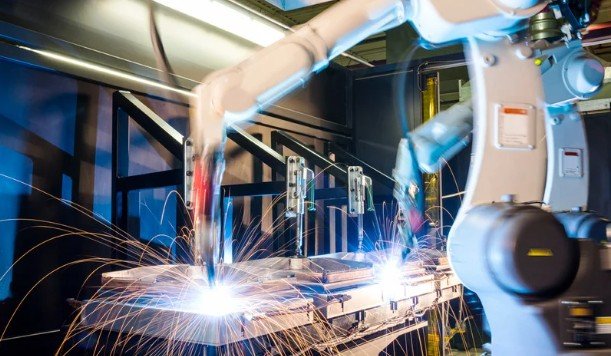
Welding power source and torch
The power source delivers controlled electrical energy for the selected process. Digital units can store welding schedules and coordinate current, voltage, pulse settings, and wire-feed speed. The torch applies heat and, when required, delivers filler material and shielding gas.
Movement and positioning equipment
Movement may come from an articulated robot, gantry, welding tractor, orbital head, turntable, or manipulator. Positioners rotate or tilt the workpiece so the joint remains accessible and can be welded in a favorable orientation.
Fixtures and tooling
Controllers, sensors, and software
The controller coordinates the welding sequence. Programming software defines motion paths and process settings, while seam-tracking or vision sensors detect variations. Offline programming can allow technicians to prepare jobs using digital models without occupying the physical cell.
Safety equipment
Automated cells may include perimeter guarding, interlocked doors, emergency stops, light curtains, arc screens, ventilation, and fume extraction. Collaborative robots can support closer human interaction, but a cobot label does not automatically make every welding application safe.
Main Types of Welding Automation
Mechanized welding
Mechanized systems control a particular movement, such as moving a torch along a straight seam or rotating a pipe. The operator normally observes the operation and can adjust the controls.
Fixed automation
Fixed systems are built for a narrow range of repetitive components. They can deliver rapid cycle times and consistent production, but substantial product changes may require new tooling or equipment.
Programmable robotic welding
Industrial robots follow stored paths and can be reprogrammed for different parts. These systems suit repeatable production where manufacturers require flexibility across several assemblies.
Collaborative welding robots
Cobots are designed to make programming and redeployment more accessible. They can be useful for smaller batches and frequent changeovers, although the welding arc, fumes, hot material, and surrounding equipment still require a complete risk assessment.
Adaptive welding systems
Adaptive automation uses sensors and feedback controls to respond to changes in joint position or process conditions. It can handle more variation than basic programmed motion, but it cannot compensate for every fit-up or material problem.
Which Welding Processes Can Be Automated?
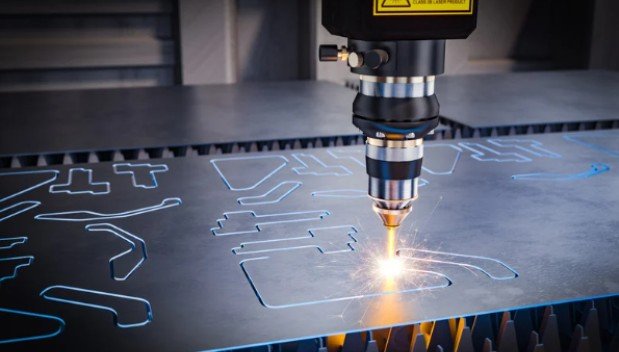
MIG welding is frequently automated because its continuously fed electrode supports fast, repeatable production. Robotic TIG welding offers precise heat control for thin materials and critical joints, although it is generally slower and requires careful preparation.
Resistance spot welding is widely suited to sheet-metal assemblies. Submerged arc systems can automate long seams and heavy fabrication, while orbital equipment produces controlled welds around pipes and tubes. Laser and plasma systems support high-speed or precision applications but usually require specialized integration and strict process control.
Benefits of Automated Welding
A properly designed system can maintain consistent travel speed, torch angle, arc length, and heat input. This repeatability can reduce variation, rework, scrap, and unnecessary use of consumables.
Automation can also increase arc-on time because the equipment does not experience physical fatigue. It separates personnel from direct arc exposure, heat, fumes, and repetitive positions during normal production. Digital monitoring can further help manufacturers identify process drift and document welding parameters.
These advantages are not automatic, however. Their value depends on utilization, part consistency, programming, maintenance, and overall workflow.
Limitations and Common Challenges
Initial costs may include equipment, integration, fixtures, guarding, training, ventilation, and facility changes. Low-volume work with highly variable components may not generate enough repeatable production to justify this investment.
Automation can also reproduce mistakes with great consistency. An incorrect program, worn contact tip, unstable wire feed, contaminated surface, or badly located component can create repeated defects. Qualified personnel must therefore establish welding procedures, monitor results, inspect welds, and maintain the cell.
Frequent product changes can create additional downtime unless programming and tooling are designed for quick changeovers.
Frequently Asked Questions
1. What does automated welding technology explained mean for beginners?
It means understanding how machines control welding movement and parameters while trained personnel manage programming, setup, maintenance, inspection, and troubleshooting.
2. Is automated welding the same as robotic welding?
No. Robotic welding is one type of automation. The broader category also includes orbital systems, welding tractors, fixed machines, positioners, and other computer-controlled equipment.
3. Does automated welding replace skilled welders?
It changes their responsibilities rather than eliminating their expertise. Welding knowledge remains necessary for procedure development, parameter selection, quality control, programming, and fault diagnosis.
4. What is the biggest disadvantage of welding automation?
The main disadvantage is the combination of initial investment and the need for consistent parts. Automation may deliver poor returns when production volume is low or fit-up varies substantially.
Final Perspective
I see automated welding as a way to preserve and apply welding knowledge more consistently, not as a shortcut around that knowledge. Robots and controlled machines can repeat movements accurately, but people must still understand materials, joint design, heat input, safety, and weld quality.
The best results come from selecting a suitable repeatable application, improving upstream part consistency, designing reliable fixtures, and training personnel before expanding the system. When those foundations are present, automation can improve productivity and working conditions while allowing experienced welders to concentrate on demanding work that still requires human judgment.
[…] production equipment introduces cybersecurity responsibilities, especially when adopting automated welding technology. Monitoring networks should use secure authentication, role-based access, encrypted communication, […]