

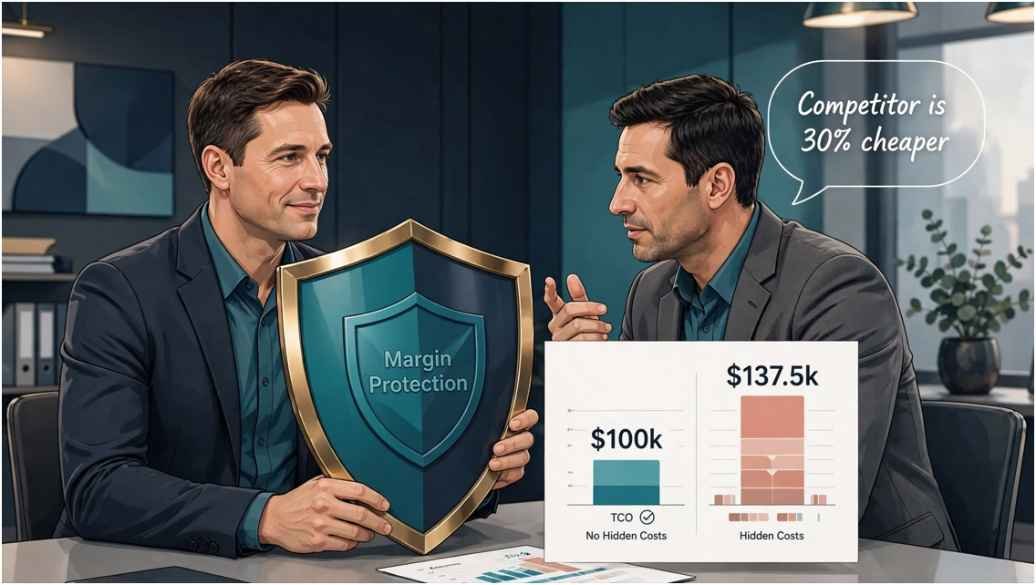
Hearing “Your competitor is 30% cheaper” used to make my stomach drop. Early in my B2B sales career, my reflex was immediate panic: offer a 15% discount, trim onboarding costs, and plead with my VP for pricing exceptions.
That instinct commoditized our service and bled our margins. Learning how to handle competitor pricing objections is not about defending your sticker price—it centers on diagnosing the scope gap and exposing what the buyer sacrifices by taking the budget exit ramp.
┌───────────────────────────────┐
│ Prospect: “Competitor is 30% │
│ cheaper” │
└──────────────┬────────────────┘
│
▼
┌───────────────────────────────┐
│ 1. Tactical Neutrality │
│ • 3-5 sec pause │
│ • Mirroring & inquiry │
└──────────────┬────────────────┘
│
▼
┌───────────────────────────────┐
│ 2. Deconstruct Scope (TCO) │
│ • Expose missing tiers │
│ • Audit hidden surcharges │
└──────────────┬────────────────┘
│
▼
┌───────────────────────────────┐
│ 3. Economic Reframe │
│ • Cost of failure vs price │
│ • Shift to business impact │
└──────────────┬────────────────┘
│
▼
┌───────────────────────────────┐
│ 4. Trade-Based Concessions │
│ • Never discount free │
│ • Reduce scope / swap terms│
└───────────────────────────────┘
The Anatomy of a Competitor Price Resistance
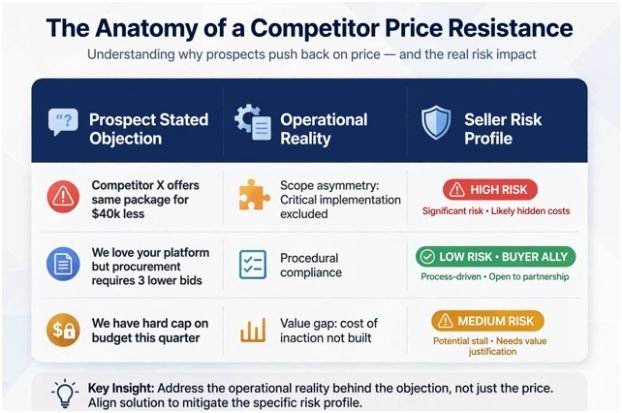
A competitor pricing objection rarely means the customer lacks money. According to research on B2B procurement from Gartner, executive purchase decisions stall primarily due to perceived decision risk, not upfront platform fees. When a prospect flags a lower quote, they usually communicate one of three things:
| Prospect Stated Objection | Operational Reality | Seller Risk Profile |
| “Competitor X offers the same package for $40k less.” | Scope asymmetry: Critical implementation layers were excluded to artificially deflate the initial quote. | High: Entering an unvetted bidding war erodes your deal margins. |
| “We love your platform, but procurement requires three lower bids.” | Procedural compliance: The team wants your solution but needs commercial justification for their finance committee. | Low: Buyer acts as an ally if you supply verifiable ROI data. |
| “We have a hard cap on budget this quarter.” | Value gap: The quantified cost of inaction has not been built out to outweigh short-term capital preservation. | Medium: Requires contract restructuring or staggered milestone rollouts. |
Understanding this difference allows you to shorten enterprise sales cycles rather than getting trapped in weeks of administrative price haggling.
Step 1: Execute the Strategic Pause and Discovery Probe
When a prospect pushes a cheaper competitor quote across the table, silence is your sharpest tactical lever.
Do not flinch, apologize, or launch into a defensive monologue. Wait three full seconds. A calculated pause signals absolute composure and commands respect. When you respond, adopt a calm, consultative tone. Mirror their observation before digging into the scope.
“They run a lean operation, and their initial sticker price often reflects that. Out of curiosity, when you examined their proposed deliverable schedule, how did they account for custom data migration and production cutover?”
This question tests whether the comparison is genuine. If they cannot answer, they used the competitor as arbitrary leverage. If they cite specifics, they revealed their evaluation baseline, which gives you clear criteria to unpack.
Step 2: Expose the Total Cost of Ownership Gap
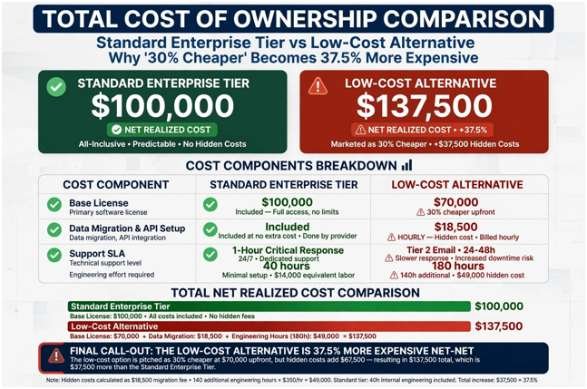
A lower price tag invariably hides trade-offs in execution speed, team bandwidth, or reliability. Your job is not to insult the alternative, but to walk the client through the total economic outlay.
Direct Deliverables vs. Hidden Overhead
Budget vendors often strip support agreements, user licenses, and security certifications to present an attractive entry fee. When structured properly during b2b sales territory planning, account reps can profile accounts against common competitor packaging deficiencies before ever jumping on a commercial call.
The table below breaks down the true cost variance between an enterprise-grade solution and a low-cost competitor over a 12-month deployment:
| Cost Component | Standard Quoted Enterprise Tier | Low-Cost Alternative (“30% Cheaper”) | Realized Operational Variance |
| Year 1 Base License | $100,000 | $70,000 | +$30,000 upfront savings for competitor |
| Data Migration & API Setup | Included (Dedicated engineer) | $18,500 (Billed hourly) | +$18,500 unbudgeted competitor surcharge |
| Ongoing Support SLA | 1-hour critical response, 24/7 | Tier 2 email only (24–48h SLA) | 14 hours avg. downtime ($28,000 lost capacity) |
| Internal Engineering Hours | 40 hours | 180 hours (Self-serve build) | 140 internal engineering hours diverted (~$21,000) |
| Net Realized Cost | $100,000 | $137,500 | Competitor is 37.5% more expensive net-net |
As outlined in pricing strategy frameworks from the Harvard Business Review, buyers routinely conflate upfront acquisition expense with total operational cost. Showing this side-by-side allows clients to calculate their own financial exposure.
Timeline Slippage and Implementation Friction
When evaluating software or complex managed workflows, time-to-value directly impacts realized returns. Cheaper vendors often operate with shared onboarding pools. If their launch slips by two quarters, your prospect burns internal payroll while awaiting core business capabilities.
Step 3: Pivot the Narrative from Line Items to Business Outcomes
If a customer insists on evaluating software like steel rebar or wholesale grain, they commoditize your engineering. Pull the conversation back to the strategic objective they outlined during initial discovery calls.
Use a direct, outcome-anchored inquiry:
“Is securing the lowest upfront contract cost your team’s core metric for this initiative, or is it eliminating workflow latency by Q3 without exposing internal engineering to technical debt?”
Framing the question around the risk of operational failure changes the buying dynamic. As tracked across deal analysis data from HubSpot, reps who consistently re-anchor discovery metrics around bottom-line impact experience substantially lower end-of-quarter discount requests.
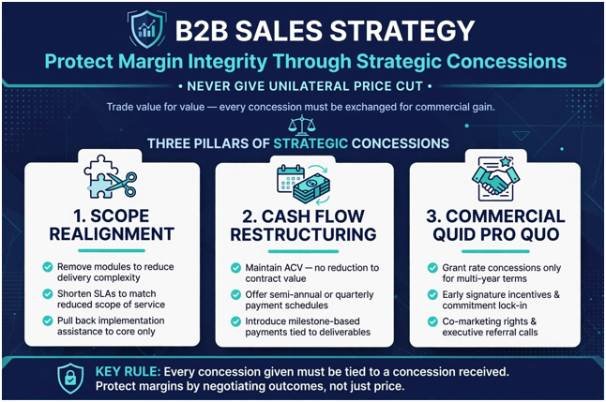
Step 4: Protect Margin Integrity Through Strategic Concessions
Never give a unilateral price cut. Flat discounts tell the prospect your opening quote was dishonest and train them to demand concessions on every renewal.
If pricing adjustments are required to close the commercial agreement, trade value instead:
- Scope Realignment: Remove modules, shorten SLAs, or pull back implementation assistance to match their exact budget ceiling.
- Cash Flow Restructuring: Maintain annual contract value (ACV) while offering semi-annual, quarterly, or milestone-based payments.
- Commercial Quid Pro Quo: Grant targeted rate concessions only in exchange for contractual wins: multi-year terms, early signature deadlines, co-marketing rights, or executive referral calls.
Frequently Asked Questions About Competitor Price Pushback
1. How do I handle a competitor price objection when their product has feature parity?
Pivot the discussion to execution reliability, SLA financial penalties, vendor viability, and the dedicated expertise of your deployment team.
2. When should a sales rep walk away from a price-sensitive prospect?
Walk away when matching the requested price demands uncompensated operational risk or yields negative gross margins for your service team.
3. Is it wise to match a competitor’s discount to win a strategic logo?
Only match if tied to binding contractual concessions, such as multi-year lock-ins, public case studies, and upfront billing schedules.
4. What is the most common mistake reps make during competitor price pushback?
Responding with an immediate defensive justification or offering a discount before diagnosing what scope items the competitor excluded.
Stop Defending Sticker Price—Start Selling Certainty
Clients do not buy products; they purchase predictable outcomes and reduced business risk. The next time a prospect leverages a competitor’s discounted quote against you, resist the urge to slash your prices. Pause, audit their proposed scope line by line, expose the hidden execution costs, and demand equitable trades for every commercial concession.

One thought on “How to Handle Competitor Pricing Objections Without Slashing Margins”