

I learned this the hard way: adding more logos doesn’t fix a low ACV problem. For two quarters my team chased volume, and revenue stayed flat. When we shifted focus to strategies to increase average contract value in b2b, our revenue per customer jumped 27% without adding a single rep. That shift came from four pillars.
Why Most B2B Teams Get ACV Wrong
Most teams treat ACV as a pricing issue. It is not. It is a targeting, packaging, and execution issue. Low ACV usually means you are selling to companies that are too small, packaging that is too narrow, and negotiating on price instead of value. I had to rebuild all three before the numbers moved.
Pillar 1: Strategic Pricing and Packaging That Drives Bigger Deals
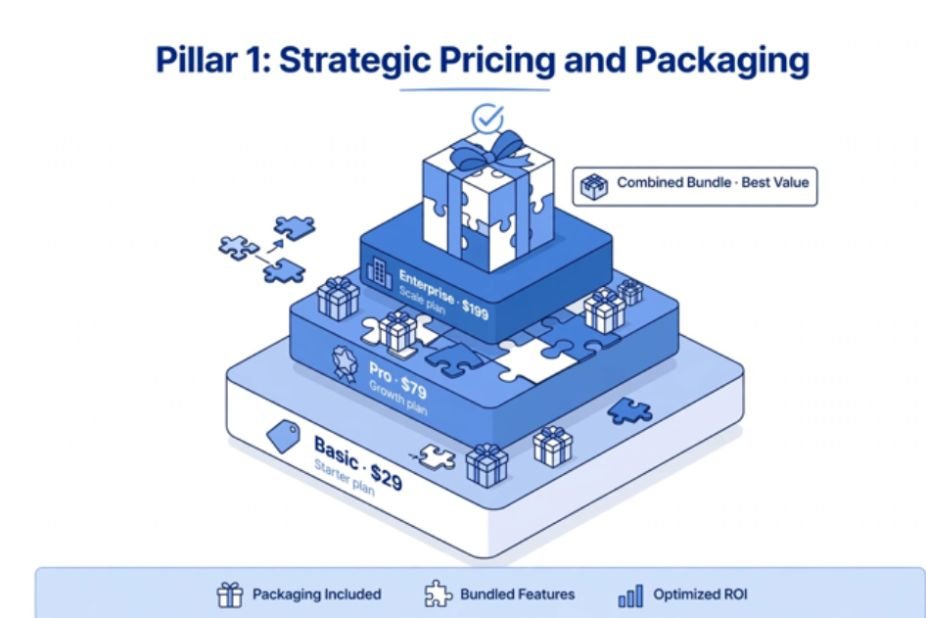
Pricing sets your ceiling. Packaging determines if buyers reach it.
Value-Based and Tiered Pricing
I stopped pricing by cost-plus and started pricing by business outcome. Each tier now aligns to a specific ROI milestone. For example, Starter = save time, Growth = drive pipeline, Enterprise = reduce churn. This approach is backed by research from Salesforce on value-based pricing strategies showing buyers pay more when price connects to outcomes. Introduce a premium tier that feels like a natural upgrade, not a penalty.
Solution Bundling vs. Modular Add-Ons
Two tactics work together. Bundling packages core product + add-ons + onboarding into one comprehensive solution. It simplifies procurement and lifts initial ticket size. Modular expansion keeps core simple but lets you attach specialized modules later. When we added two paid add-ons for security and advanced analytics, initial ACV rose because buyers could solve two extra problems on day one.
| Tactic | When I Use It | Impact on ACV |
| Tiered Pricing | Buyer is growing and needs clear upgrade path | Medium, predictable lift |
| Solution Bundling | Enterprise procurement wants one vendor | High initial lift |
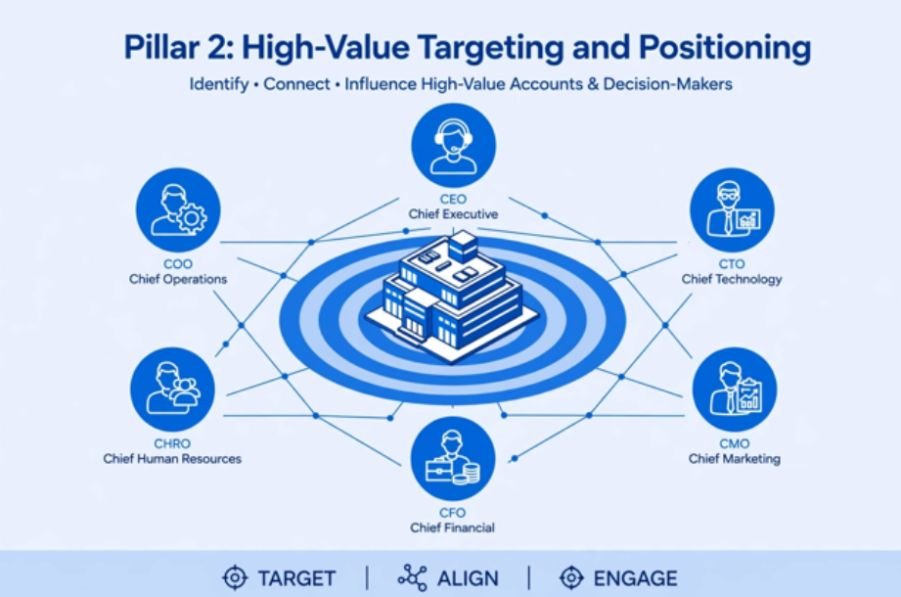
Pillar 2: High-Value Targeting and Positioning
You cannot upsell an account that should never have been a customer.
Tighten Your ICP and Move Up-Market
We cut 40% of our inbound leads after defining a rigorous Ideal Customer Profile.
According to Gartner’s B2B buying research, larger buying groups have bigger budgets but need clearer business cases. That was our signal to move up-market intellectually.
This is where solid b2b sales territory planning saved us — we mapped accounts by potential contract size, not just geography.
Multi-Threading to the C-Suite
Selling to one champion keeps deals small. I now require multi-threading to finance and the C-suite before proposal. When you connect your solution to corporate objectives instead of team-level pain, you justify a larger investment. It also shortens negotiation because you are not blocked by someone without budget authority.
| Targeting Signal | Low ACV Risk | High ACV Signal |
| Decision Maker | Manager-level only | VP / C-suite engaged |
| Use Case | Single team | Cross-functional rollout |
Pillar 3: Sales Execution That Protects Margin
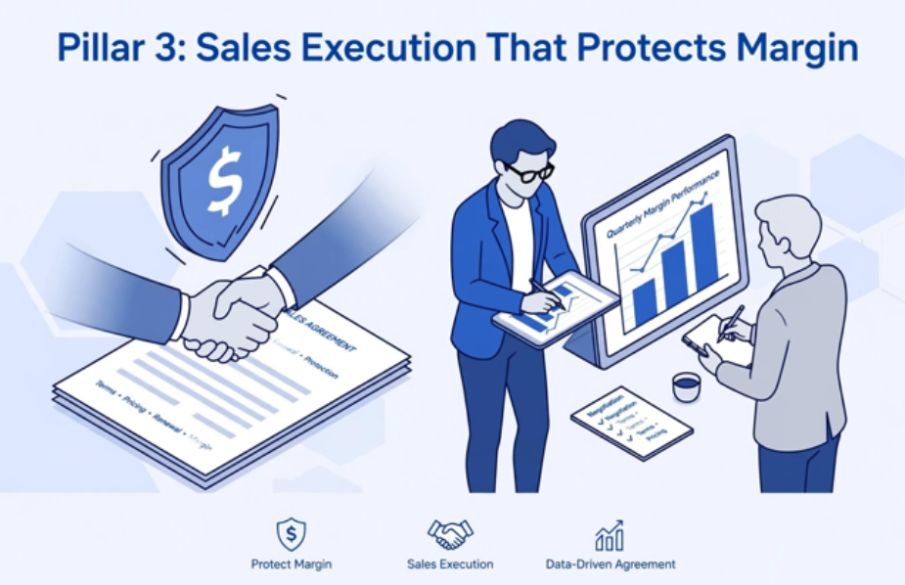
This pillar protects the value you created in pillars 1 and 2.
Consultative Selling Over Feature Dumping
I rewrote our discovery script. We no longer demo features first. We diagnose the full operational cost of the problem. HubSpot’s guide to consultative selling confirms outcome-based discovery increases deal size. Sell ROI first, features second.
This also makes your b2b sales demo closing techniques more effective because the demo maps directly to money saved or earned.
How I Replace Discounts With Value
Discounting trains buyers to wait. When I face price pressure, I never cut price. I add value. Offer advanced implementation, dedicated onboarding, or extended premium support instead. The buyer feels they won, and you protect margin. We built a menu of value-adds that cost us little but mean a lot to enterprise buyers.
Pillar 4: Post-Sale Expansion and Account Growth
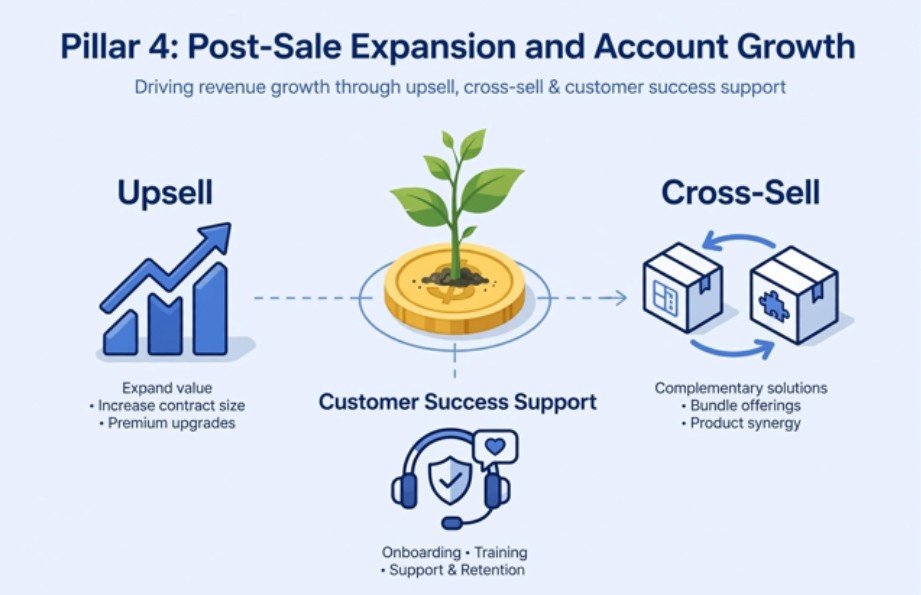
ACV compounds after signature. Your expansion motion should start during the initial sale.
I use usage data to trigger upsells. If adoption hits 80% in 60 days, my CSM introduces the next module. Value-Added Services like custom training, a dedicated account manager, and priority support are high-margin ACV drivers that B2B buyers willingly pay for.
As noted by Harvard Business Review on capturing value, wrapping services around product increases willingness to pay.
| Expansion Lever | Example | Margin Profile |
| Predictive Upsell | Usage threshold triggers new module | High |
| Value-Added Services | Priority support + training package | Very High |
Quick Reference: ACV Tactics Comparison
| Strategy | Effort to Implement | Time to Impact | Best For |
| Tiered Pricing | Medium | 1-2 quarters | SaaS, PLG companies |
| Bundling | Low | Immediate | Competitive deals |
| ICP Refinement | High | 2-3 quarters | Teams with low win rates |
Frequently Asked Questions
1. What is a good average contract value in b2b saas?
It varies by segment, but mid-market SaaS typically ranges $15k-$50k and enterprise $75k+.
2. How do you calculate strategies to increase average contract value in b2b roi?
Divide total contract revenue by number of contracts, then track lift after each pricing or packaging change.
3. Can you increase ACV without raising prices?
Yes, through bundling, add-ons, and reducing discount rate.
4. Does moving up-market always increase ACV?
Only if your product solves enterprise-grade problems; otherwise it increases sales cycles without ACV gain.
Stop Chasing More Logos, Start Growing Each Logo
Chasing logos is exhausting. Growing each logo is compounding. I started with one change: I bundled onboarding as a paid service instead of giving it away. That single move lifted ACV by 11% in 30 days. Pick one pillar this week and test it on your next five proposals.