

I used to lose a quarter to one phrase: “We just need two more weeks.” After seven years leading enterprise cycles, I learned that ways to reduce enterprise sales deal slippage have nothing to do with better closing lines.
Enterprise deals rarely slip because the buyer lost interest. They slip because we failed to map the complex internal hurdles required to cross the finish line.
That shift from seller-centric to buyer-centric control changed my forecast accuracy from 62% to 91% in two quarters. Here is the exact system I now run.
1. I Stopped Trusting Gut Qualification
Loose qualification is the number one cause of slippage. If you rely on verbal commitments, your dates will move.
The MEDDPICC Gateway Rule I Now Enforce
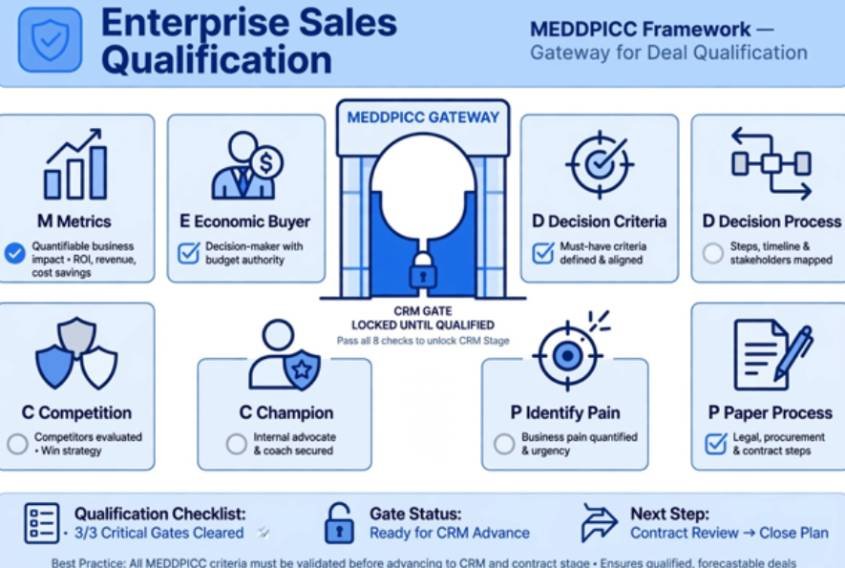
I do not allow any deal to enter Commit unless three things are documented in the CRM with proof. Economic Buyer has confirmed the business case directly, Decision Criteria are written in the buyer’s words, and the Paper Process is mapped with names and steps.
Research from Gartner shows the typical enterprise buying group now includes 11 stakeholders, which explains why champion-only intel fails.
When you want to scale this down, learn how to implement meddpicc in mid-market deals without adding bureaucracy.
The CRM Rule That Fixed My Forecast
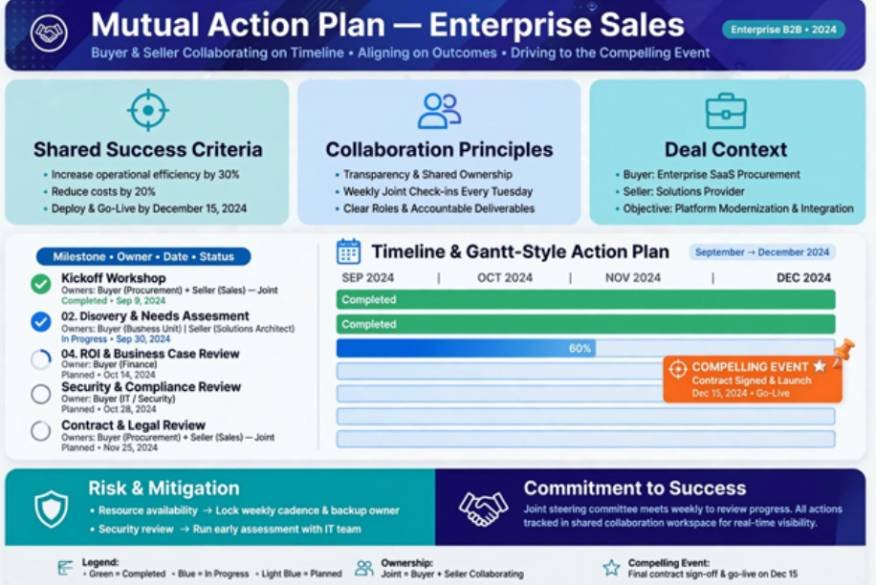
I created a hard gateway. To move to Verbal, reps must attach a Mutual Action Plan signed by the champion and an intro email to legal. No attachment, no stage advancement. This single rule killed our happy ears pipeline. A packed pipeline of dead deals masquerading as active ones destroys forecast accuracy.
2. I Co-Create The Timeline With The Buyer
A deal without a shared timeline is just a wish. I stopped sending internal timelines and started co-building them.
Anchor Everything to Their Compelling Event
I ask why they need to go-live by a specific date. Is it a board meeting, a legacy system sunset, or a regulatory deadline? I then work backward from that date. This is what Salesforce calls a customer-centric close plan, and it forces urgency that discounting never will.
To make this repeatable, you should build a mutual action plan template that assigns owners on both sides.
For me, every MAP includes security review, IT architecture approval, data privacy assessment, legal redlines, and executive sign-off. Each gets a specific owner and date. And I run silence management. I send a brief update every 48 hours, even if it says “Waiting on your InfoSec team for questionnaire.” It maintains momentum without being pushy.
3. I De-Risked Single-Threading For Good
Losing your primary champion can stall a deal overnight. One of my largest slips last year happened because my champion went on medical leave and no one else knew our value prop.
I now build an Opportunity Map during discovery. I map users, influencers, blockers, and the ultimate decision-maker.
Harvard Business Review found that consensus buying is the new norm, and deals with single-threaded engagement are 3x more likely to stall in procurement.
I require at least three active threads before technical validation is marked complete. I also match executives early. My VP reaches out to their Economic Buyer in week two, not week ten, to establish peer rapport.
4. I Front-Load The Bureaucracy That Kills Deals
Enterprise deals do not die on the product demo. They get stuck in paperwork.
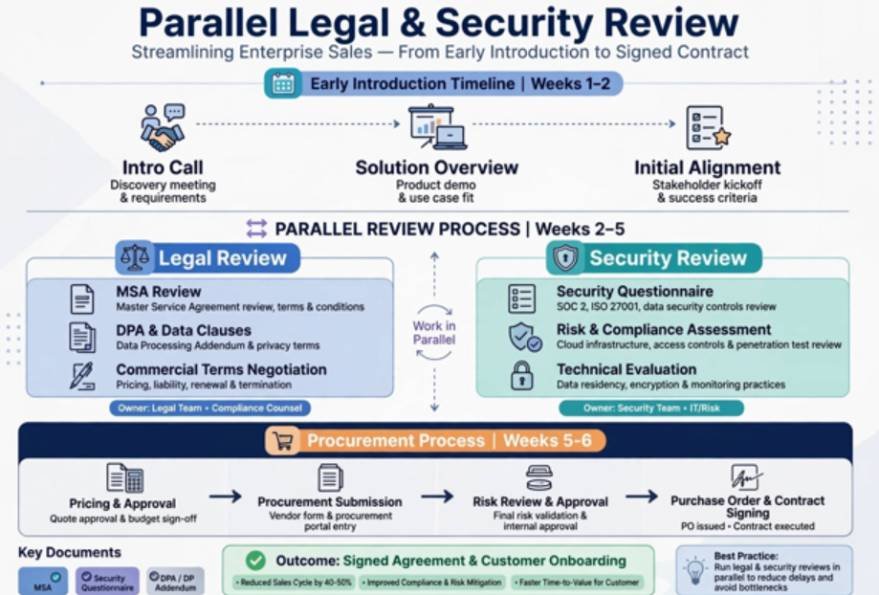
That is why I use how to implement MEDDPICC in mid-market deals as a practical framework for uncovering decision criteria, identifying the people involved in the buying process, and exposing deal risks before legal and procurement become bottlenecks.
According to McKinsey, up to 40% of B2B purchase delay comes from internal legal and procurement misalignment.
I parallel-path redlines. I do not wait for a verbal yes on pricing to start legal and security review. I introduce our security packet and standard MSA as early as value validation. Outreach’s research on deal slippage also confirms that early legal introduction shortens sales cycles by an average of 18 days.
I also socialize pricing early. The final negotiation is not the time to reveal structure. I give my champion a clean, outcome-based one-pager early so they have time to build internal budget consensus. If they cannot socialize it, you do not have a deal.
5. I Built Accountability Around The Close Date
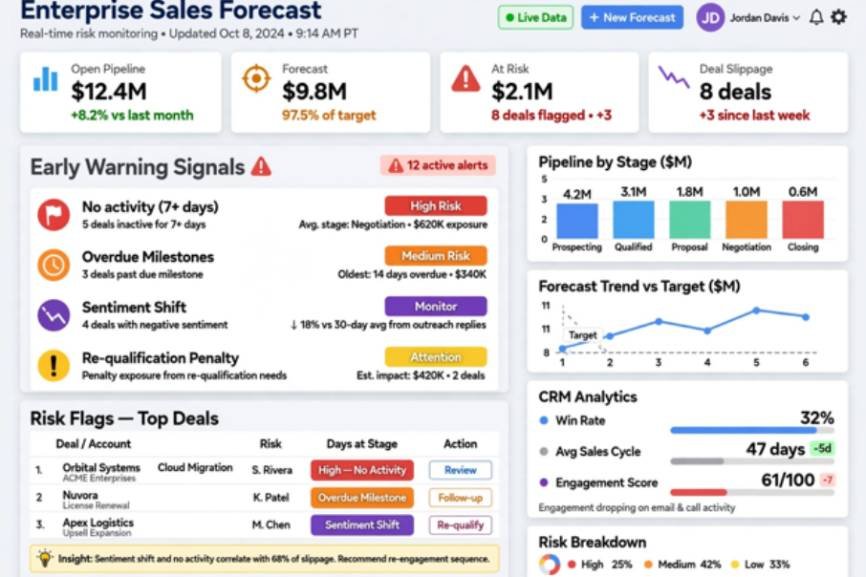
Systemic slippage is a coaching and culture issue. I instituted a Re-Qualification Penalty. If a rep pushes a close date, it triggers a mandatory review. What new information caused the delay? What changed in Paper Process? It is treated as a deal risk event, not a calendar change.
I also built early warning dashboards in our CRM. We auto-flag deals with no buyer activity for 7 days, overdue MAP milestones, or a sudden negative shift in email sentiment. This lets us intervene before the slip is official.
My Slippage Post-Mortem: What 37 Slipped Deals Taught Me
I analyzed 37 slipped deals from 2023-2024. Here is what I found:
| Root Cause Category | % of Slipped Deals | Avg. Days Slipped |
| Paper Process Not Mapped | 38% | 43 days |
| Single-Threaded Champion | 27% | 31 days |
| No Compelling Event / MAP | 21% | 28 days |
| Late Legal / Security Intro | 14% | 51 days |
The biggest insight: 65% of slips had nothing to do with product or price. They were administrative failures we could have controlled in week two. That data changed how I coach entirely.
Stop Chasing Dates. Control The Process Instead
You cannot control when an enterprise signs. You can control whether you have mapped every hurdle between now and signature. If you want to reduce slippage this quarter, pick one system.
Enforce the MEDDPICC gateway before Commit and co-create a dated MAP with owners. Forecast accuracy will follow.
Start with your current Commit deals. Ask your rep to show you the signed MAP and the name of the person in legal. If they cannot, you already found your next slip.
Frequently Asked Questions
1. What is the main cause of enterprise sales deal slippage?
Poor qualification and unmapped Paper Process, not product or price.
2. How does a mutual action plan reduce slippage?
It creates a shared, owner-assigned timeline anchored to the buyer’s compelling event.
3. How early should legal and security be introduced?
During value validation, parallel to technical win, not after verbal yes.
4. What is the best qualification framework to prevent slippage?
MEDDPICC with enforced CRM gateways requiring proof of Economic Buyer and Paper Process.

One thought on “Ways to Reduce Enterprise Sales Deal Slippage”